
History in the Sand: The Origins of Namibia’s Sandwich Harbour
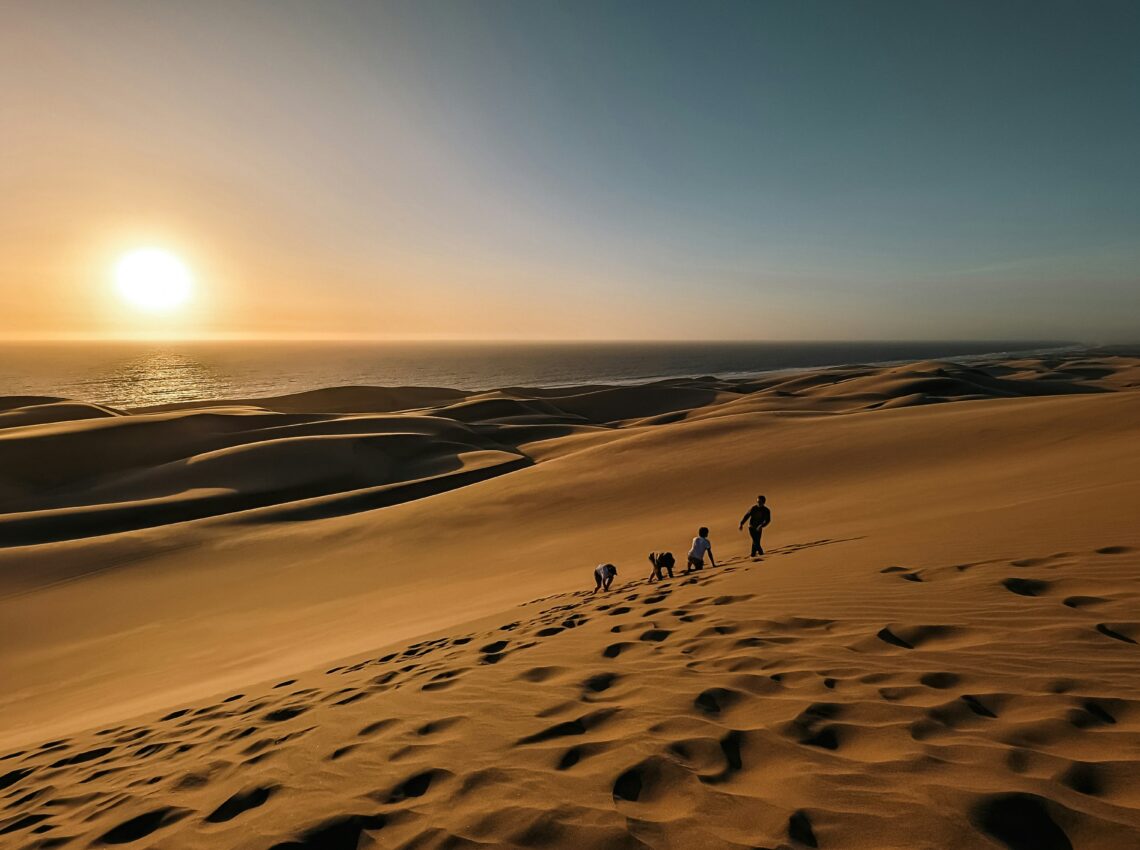
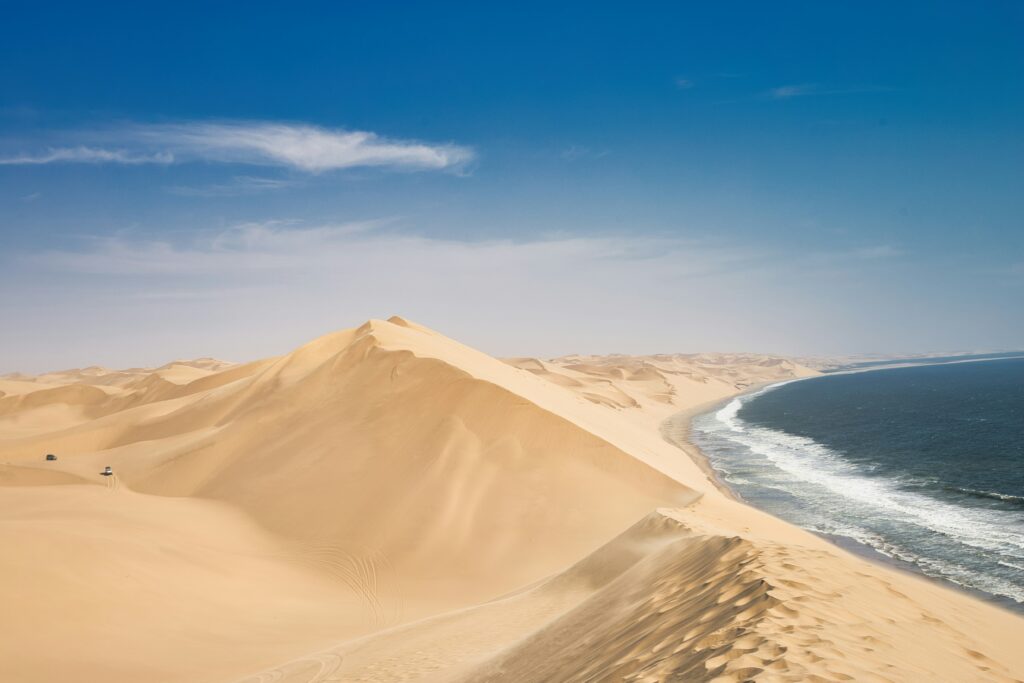
At Sandwich Harbour, the dunes of the Namib slip into the Atlantic in waves of sand and mist. Once a whaling stop and natural harbour, it is now a protected wilderness where history and ecology meet at the edge of the sea.
The short version: Sandwich Harbour was a natural anchorage on the Namibian coast used by whalers and traders from at least the eighteenth century. Shifting sand made it a poor and increasingly unusable port, a 1930s attempt to farm guano there failed, and the harbour was gradually abandoned. It now sits inside Namib-Naukluft National Park as a Ramsar-listed wetland, with almost nothing left standing.
Sandwich Harbour: a timeline
- Around 1,000 years ago. Coastal communities live along this stretch of shore. Shell middens and stone tools survive inside what is now the Ramsar zone.
- Fifteenth century. A harbour is recorded on this stretch of coast, most likely serving whalers. Its scale at that point is not well documented.
- 1780s. The likely origin of the name. Some historians attribute it to an English whaling vessel called Sandwich, active in these waters at the time.
- Nineteenth century. Whalers and traders use the lagoon as one of the few partial shelters on an otherwise brutal coastline.
- 1930s. Engineers attempt to build an artificial guano island using Dutch sand-pumping technology. Jackals cross the sandbanks at low tide, the seabirds never settle, and the scheme collapses.
- 23 August 1995. The wetland is listed under the Ramsar Convention, recognised as one of the most important coastal wetlands in southern Africa.
- Today. Protected within Namib-Naukluft National Park. Only the remains of the guano manager’s house survive.
The Place Where Desert Meets Sea
Where one of the world’s oldest deserts meets the ocean, the dunes of the Namib plunge into the Atlantic in sweeping curves of gold and white. This rare meeting of desert, ocean, and sky creates a landscape of silence and contrast. Here, the story of Sandwich Harbour begins, a story of risk, resilience, and renewal.
A Harbour Lost to Time
In the early days of European exploration, whalers and traders searched for safe anchorages along Namibia’s harsh coast. Sandwich Harbour offered partial shelter, although its shifting sands made it a risky refuge. Over time, it transformed from a small port into a Ramsar-listed wilderness filled with birds, saltpans, and stillness. Today, the area lies within Namib-Naukluft National Park and is protected for both its ecological and cultural history. Beneath the quiet surface remain traces of centuries of human presence, including sailors, fishermen, and early coastal communities who learned to survive in one of Earth’s most dramatic environments.
Name Origins and Maritime Myths
The name Sandwich Harbour carries both mystery and maritime memory. Some historians believe it honours an English whaling vessel called Sandwich, active in the 1780s. Others suggest a German origin from the word Sandfische, meaning sand fish, once common in these waters. Old maps show variations such as Sandwich Bay, Sandvisbaai, and Sandfisch Bai. Each version reveals how explorers and sailors from different nations described this coastline in their own languages.
The Guano Experiment
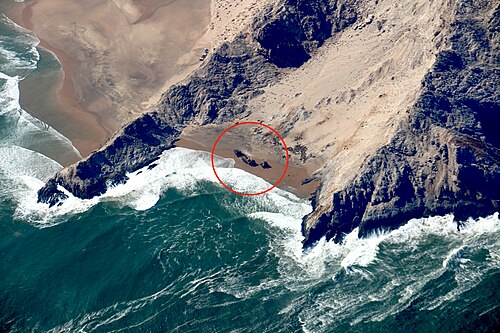
In the 1930s, engineers tried to create a guano island in the lagoon using Dutch sand-pumping technology. They hoped seabirds would nest and produce fertilizer. The project failed almost immediately when jackals crossed the sandbanks at low tide and scared the birds away. Only the manager’s small house remains, slowly reclaimed by wind and sand. It serves as a quiet reminder that nature often resists human attempts to control it.
Ancient Coastal Life
Long before the whalers arrived, Indigenous communities lived along this coast. Archaeological sites within the Ramsar zone date back about a thousand years. Excavations reveal shell middens, stone tools, and traces of fishing and hunting. These findings show how early people adapted to a place where fresh water was scarce but marine life was rich. They relied on the sea and the intertidal flats for food and used natural resources with care.
Sandwich Harbour’s early history is one of discovery, failure, and adaptation. From whalers and explorers to forgotten guano engineers, each chapter adds a layer to the story written in its sands. Beneath the dunes and wind lies evidence of human resilience and a reminder that even in the harshest environments, life and memory endure.
Sandwich Harbour or Sandwich Bay?
They are the same place. Sandwich Bay is the older and more literal description of the lagoon and its shoreline, while Sandwich Harbour refers to the anchorage that ships once used within it. Historic charts also carry Sandvisbaai and Sandfisch Bai, reflecting the Dutch and German traditions that mapped this coast. You will see the American spelling Sandwich Harbor too, particularly in tour listings. All of them point to the same stretch of water around sixty kilometres south of Walvis Bay, inside the Namib-Naukluft National Park.
The Club Reis letter
One considered travel letter a month. A remarkable stay, a local table, and a route worth saving. No daily emails, no filler, unsubscribe whenever you like.
Common questions
Why was Sandwich Harbour abandoned?
Sand. The lagoon shifted constantly, which made it an unreliable anchorage even at its busiest. As larger and better equipped ports developed along the coast, there was no reason to keep using a harbour that might not be there next season.
Is anything left of the harbour today?
Very little. The most visible remnant is what is left of the guano manager’s house from the 1930s scheme, steadily disappearing under wind and sand. The archaeological record beneath the surface is far richer than anything you can see standing.
Can you visit Sandwich Harbour?
Yes, but only with a licensed guide. It sits inside Namib-Naukluft National Park, a permit is required, and the only driveable access is a narrow strip of beach between the dunes and the Atlantic that is passable for a few hours either side of low tide. Tours run from Walvis Bay, typically departing around 8.30am or early afternoon depending on the tide, and take roughly half a day. This is not a self-drive destination, and even guided tours do not always reach the lagoon itself.