
Sossusvlei and Deadvlei: Where Time Stands Still
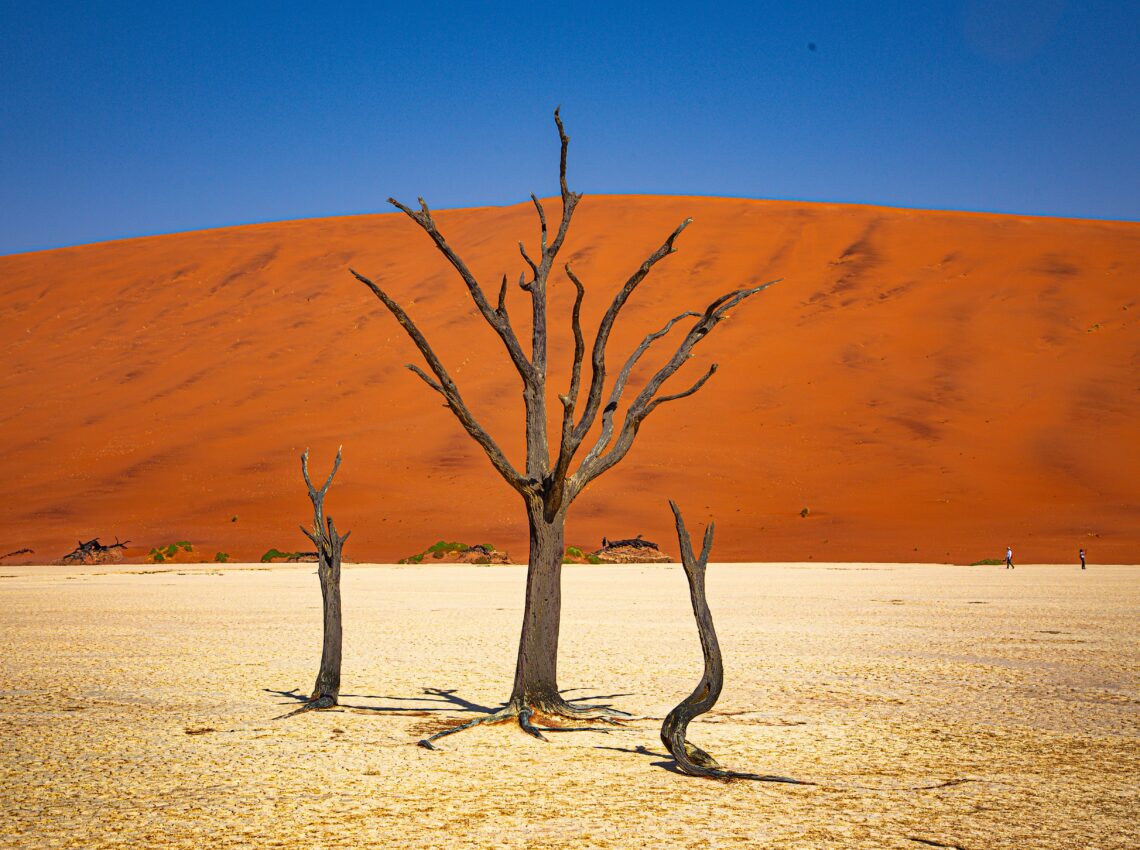
In the heart of the Namib Desert, where light carves long shadows across apricot dunes, lies a place that looks almost unreal. Deadvlei sits within Sossusvlei, a salt and clay pan surrounded by some of the tallest dunes on Earth. Here, the bones of camel thorn trees rise from a white floor like sculptures. They have stood for more than six centuries, frozen in time beneath an endless blue sky.
This otherworldly landscape is not imagination but geology and climate working together. An ephemeral river once fed a marsh where those trees grew. Then the dunes moved, cutting off the water and sealing the pan from life. The trees died between six and seven hundred years ago, but the air was so dry that they never decomposed. Their trunks blackened under the sun and remain perfectly preserved, forming one of the most haunting sights in Africa’s oldest desert.
How Deadvlei Formed
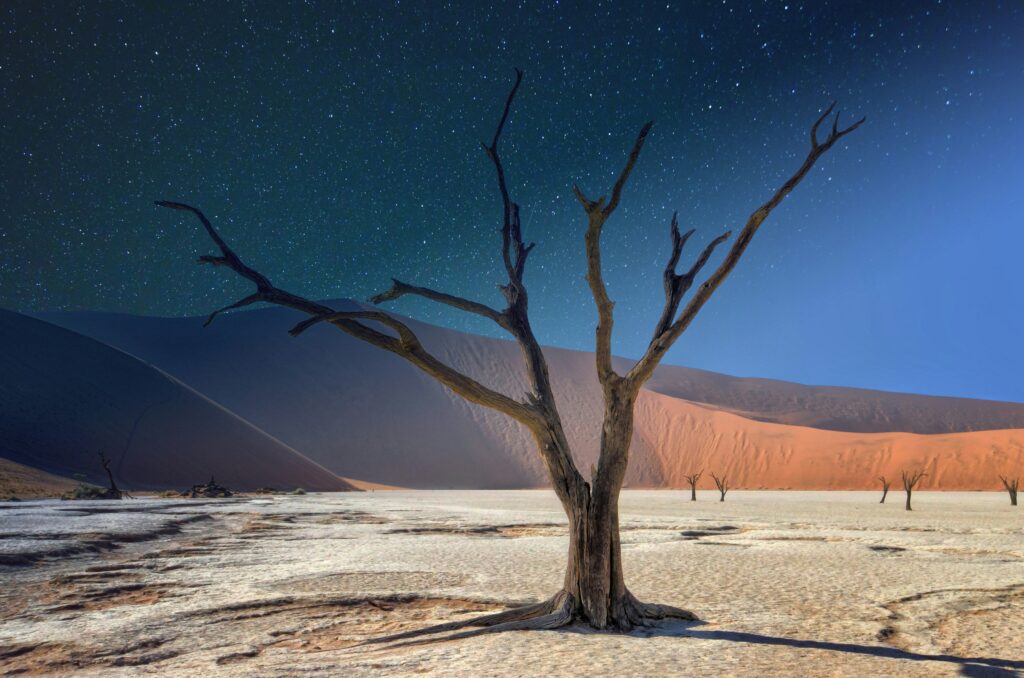
The Tsauchab River begins in the Naukluft Mountains and flows only after rare rainfalls. Long ago, it filled shallow basins between dunes, creating temporary wetlands where camel thorn trees could grow. Over time, the wind carried sand across the floodplain, pushing dunes into the river’s path. These migrating dunes dammed the flow and isolated the basin that became Deadvlei.
Without water, the clay cracked, the marsh dried, and the trees slowly died. Because decomposition requires moisture, their wood never rotted. Instead, the Namib’s hyper arid air preserved each trunk in place, leaving them to tell the story of a vanished wetland. Scientists studying the sediment describe this process as the creation of “fluvial aeolian vleis”—shallow basins formed by the interplay of river flow and wind blown sand.
Why It Feels Mystical
The power of Deadvlei lies in contrast. Blackened tree trunks stand on a bleached white pan, encircled by dunes the colour of rust and framed by cobalt sky. The effect is stark yet harmonious, as if the entire scene were a living painting.
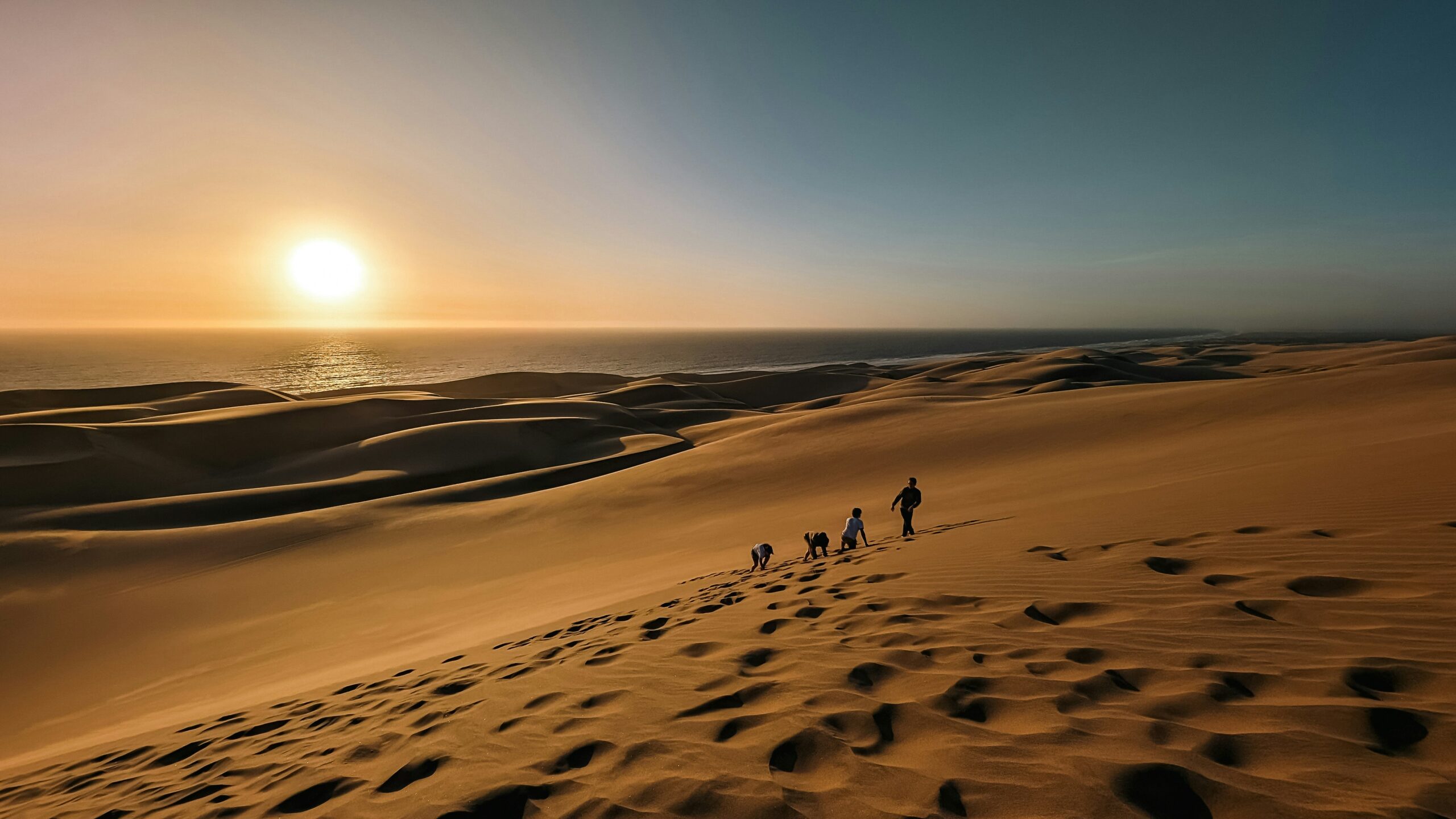
The dunes themselves can reach heights of about three hundred metres. Their colour comes from iron oxide in the sand, which glows deep orange at sunrise and sunset. Early morning fog, carried inland from the Atlantic, softens the light and adds an ethereal haze. Standing there, you can hear almost nothing—only the whisper of sand moving in the wind. The silence makes the landscape feel suspended in time.
The Science of Preservation
The camel thorn trees of Deadvlei are often described as fossilised, but this is not accurate. They are preserved rather than petrified. The wood has been desiccated by centuries of heat and dryness, which prevents decay. Carbon dating suggests the trees died between 1340 and 1430, meaning each trunk has stood under the same desert sun for more than six hundred years. Their surfaces are scorched black, yet their forms remain intact, untouched by termites or fungi.
The word “Deadvlei” translates to “dead marsh.” “Vlei” comes from Afrikaans and refers to a shallow, marshy basin that holds water after rain. The name describes exactly what this place once was—a seasonal wetland now stranded between dunes inside Namib Naukluft National Park. Sossusvlei, which lies nearby, shares the same root. Both sites mark where the Tsauchab River once reached before the desert claimed it.
The Geology of Color
Sossusvlei and Deadvlei lie within the Namib Sand Sea, the only coastal desert in the world influenced by fog from the ocean. This fog is crucial to life here, providing moisture for small plants and insects that sustain the desert ecosystem. The dunes’ rich tones come from iron in the sand that has oxidised over millions of years. Many of them are “star dunes,” shaped by winds that shift direction throughout the year. Their slow migration continues to sculpt new valleys and pans in an ever changing desert mosaic.
Visiting at First Light
Deadvlei is reached via the Sossusvlei access road, followed by a short, sandy walk of about one kilometre from the parking area. The path can feel strenuous in heat, so carry water and start early. The best times to visit are at sunrise or late afternoon when the light is soft and the air is cooler. Shadows stretch across the clay pan, revealing the fine cracks that pattern its surface.
From the ridge of Big Daddy dune, one of the highest in the area, you can see the geometry of the pan spread below—white, black, orange, and blue arranged like a minimalist painting. Photographers often climb before dawn to capture this view in the first light, when fog lingers and the desert glows.
Why This Landscape Matters
Sossusvlei and Deadvlei are more than photogenic icons. They are records of how climate and time shape the Earth. Each cracked pan tells of rivers that once flowed and of dunes that moved to block them. Each blackened tree speaks to the endurance of life in a place defined by scarcity.
To stand here is to witness what remains when everything else has been stripped away. Just light, sand, sky, and time. Beauty born from extremes—colour without clutter, silence without emptiness. One of the few landscapes on the planet that still feels completely untouched, a meeting of art and science, history and heat, desert and sky.