
Mpala Jena: Where the Zambezi Slows Down
Location: Zambezi National Park, Zimbabwe
Nearest Airport: Victoria Falls International Airport (40 minutes by road)
Nearby: Victoria Falls – 19km | Livingstone, Zambia – 45 minutes
The hippos start around four in the morning. Their grunting carries across the water, low and territorial, the kind of sound that pulls you out of sleep without quite waking you. Through canvas walls, you can hear the river moving. An elephant crosses somewhere nearby, the crack of branches, heavy footfall in sand. By the time light filters through the trees, you’ve already been listening to the Zambezi for an hour.
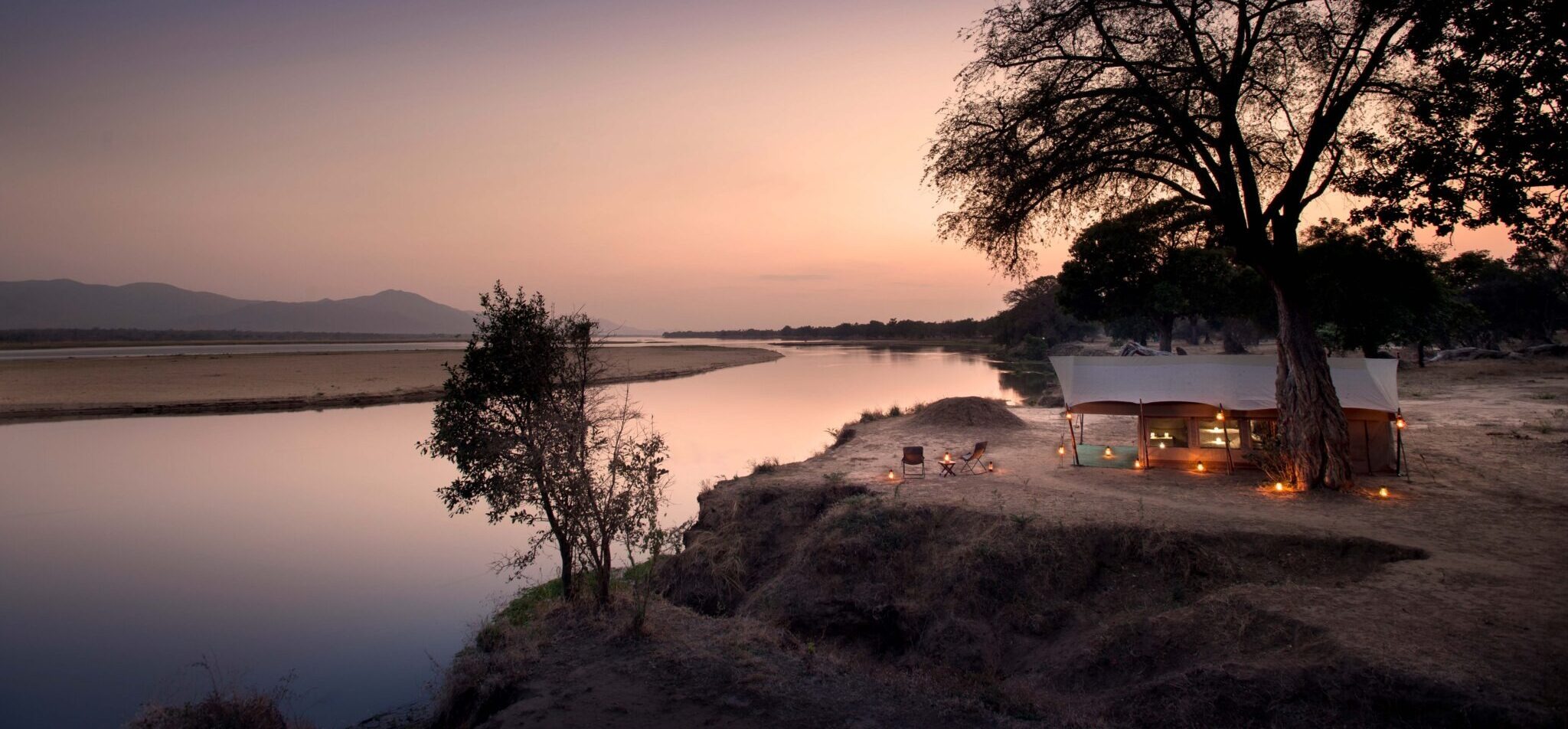
Mpala Jena sits 19 kilometers inside Zambezi National Park, where the river widens and slows before dropping over Victoria Falls. It’s close enough to the falls that you can visit for half a day, far enough that the sound here is birdsong instead of thunder. Great Plains Conservation built the camp in 2019 with five tented suites on a private concession, solar panels instead of generators, and outdoor showers that face the water. The name translates as “white impala” – a reference to an albino antelope park rangers used to see here in the 1970s.
The Physical Space
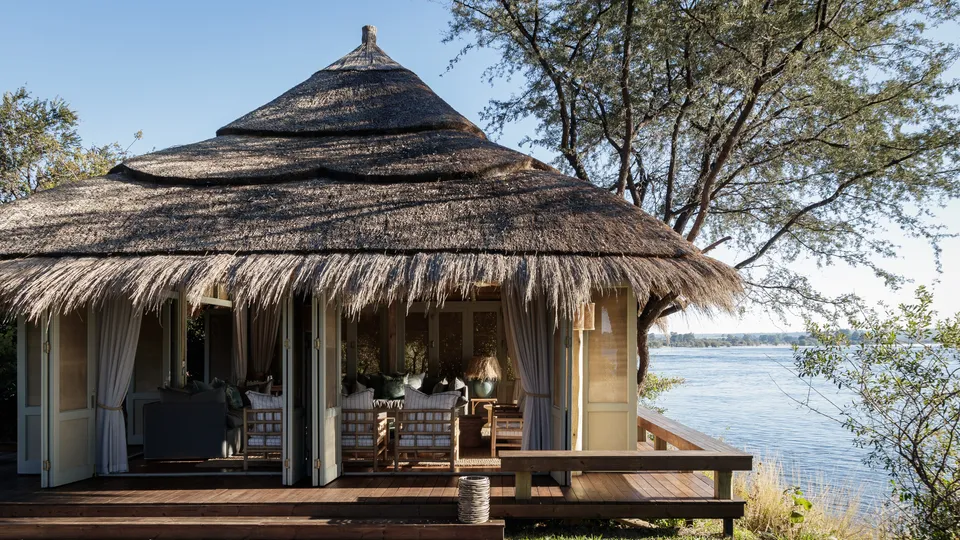
The main area sits on white river sand under thatch. There’s a bar with rope swings instead of barstools, a pool that looks out over the Zambezi, and a sand floor that makes shoes feel unnecessary. The architects; Craig Hayman and Hannah Charlton, leaned into Moroccan influences: curved stone walls, copper fixtures, natural tones. It reads as deliberate without being precious.
Suites spread along the riverbank under sausage trees and jackalberries. Each one is canvas and wood on a raised deck, with a king bed draped in mosquito netting, a leather sofa, and an en-suite bathroom separated by half-moon stone walls. There’s a bathtub, an indoor shower, and a second shower outside that’s open to the sky. The plunge pools are private, sized for cooling off rather than swimming. Two of the five suites connect as family configurations.
Air conditioning runs on solar power, which matters in October when temperatures push past 35°C. At night, the canvas lets sound through, hippos moving along the bank, the occasional hyena call, elephants if they pass close. You hear everything, but the tent keeps you separate from it.
In August 2025, Great Plains opened the first of two private villas five kilometers from the main camp. Three bedrooms, a private butler, dedicated guide and vehicle. The second villa is planned for 2026.
Wildlife and the Park
Zambezi National Park covers 56,000 hectares along the river upstream from Victoria Falls. The wildlife density doesn’t match Hwange or Mana Pools, Expert Africa notes the game viewing here is “fairly limited” compared to Zimbabwe’s larger parks – but what’s present is reliable. Elephants concentrate along the river during dry season, particularly June through October. Buffalo, hippo, and crocodile are constants. The park claims the highest lion density per square kilometer in Zimbabwe, though sightings aren’t guaranteed.
Game drives happen morning and afternoon in open Land Cruisers. Guides know the network of tracks through the concession and adjust routes based on what’s moving. Impala, kudu, giraffe in the floodplains. Carmine bee-eaters nesting in the banks. African skimmers at dusk.
Boat cruises offer a different perspective, drifting the Zambezi in early morning or late afternoon, watching elephants come down to drink, kingfishers diving, crocs barely registering your presence. The dhow cruise uses a traditional wooden Zanzibari boat for a slower, more atmospheric version of the same experience.
Catch-and-release tigerfish season runs June to December. Guides handle the setup; you handle the fight. Walking safaris and birding are available year-round, though bird diversity peaks November through April with summer migrants.
Victoria Falls Access
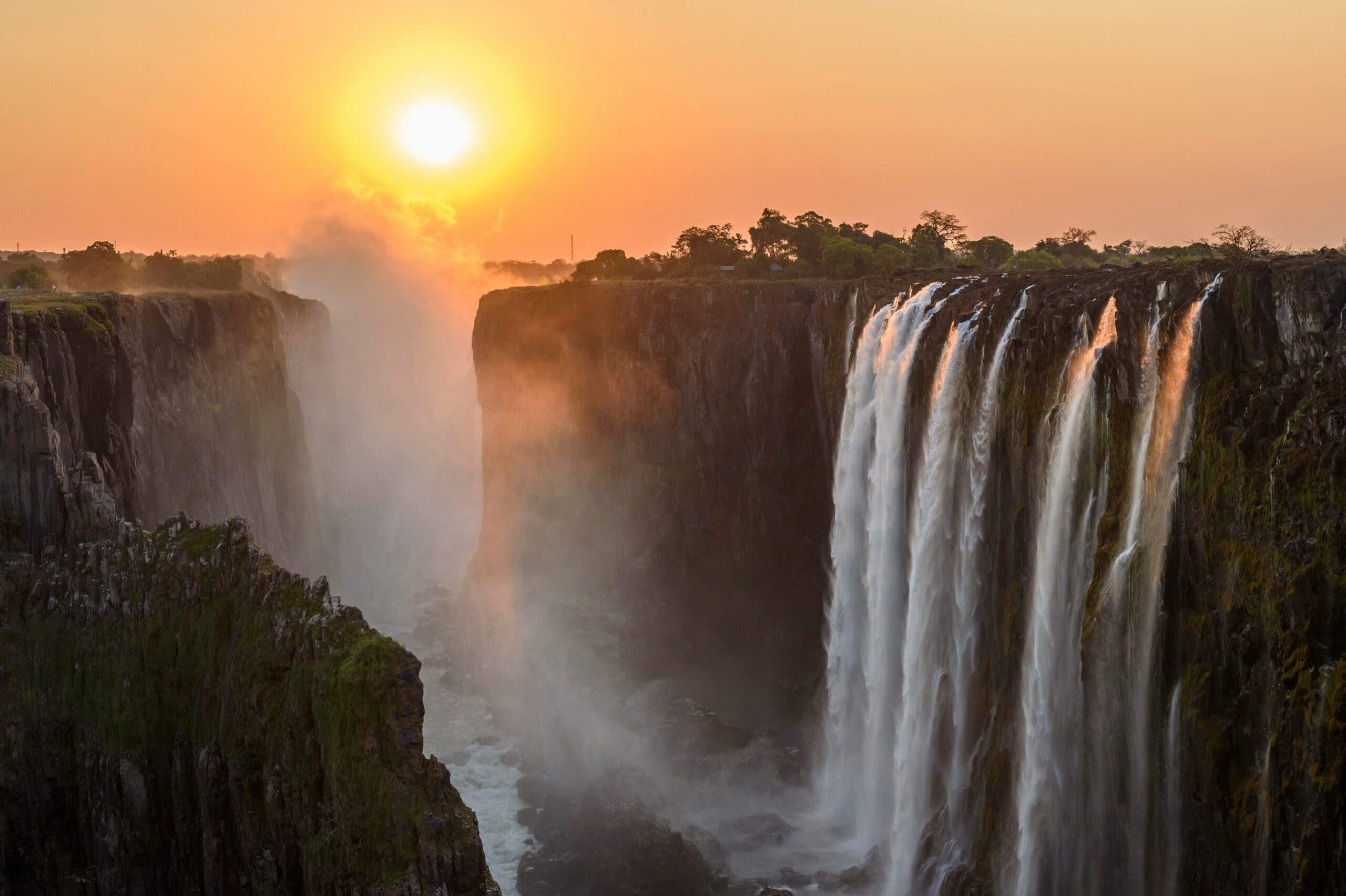
A guided Victoria Falls visit is included in stays of two nights or more. The transfer takes 40 minutes by road or boat, depending on conditions and preference. You walk the Zimbabwean side through rainforest paths where spray rises hundreds of meters and rainbows form in the mist whenever the sun hits right.
Falls volume varies dramatically by season. February through May, fed by summer rains, the falls are at full force, massive volume, spray visible from kilometers away, sections of the gorge obscured by mist. Water levels drop through winter. By September and October, visibility improves and certain sections, like the Devil’s Pool on the Zambian side – become accessible. Different times of year offer different experiences: raw power versus detail.
The proximity to the falls is Mpala Jena’s main practical advantage. You can do a morning game drive, visit the falls midday, return to camp for an afternoon river cruise. No lost transfer time, no feeling rushed between locations.
Design Philosophy and Operations
Great Plains designed the camp to minimize its footprint. Canvas and timber construction. Recycled hardwoods, some sourced from old railway sleepers. Everything runs on solar power, a 40-kilowatt solar farm with battery storage handles air conditioning, refrigeration, lighting, hot water. You don’t hear generators. At night, the only mechanical sound is the occasional hum of a ceiling fan.
The “barefoot luxury” marketing language translates to: nice materials, no dress code, sand underfoot in the main areas. Meals happen under thatch with the river visible through trees. There’s a small spa with two treatment beds facing the water. A boutique that sells safari clothing and local jewelry. WiFi in the suites but not the main area.
Tracy Kelly handled interior design, pulling in elements from both Moroccan and southern African traditions. The result feels cohesive without being themed. Copper basins, stone walls, leadwood furniture, raffia details. It works.
Seasons and Practical Notes
Dry season (June-October): Best game viewing as water sources shrink and wildlife concentrates along the river. Vegetation thins, visibility improves, temperatures are warm but manageable. Peak safari time.
Green season (November-April): Summer rains swell the river. Victoria Falls is at its most powerful. Birdlife peaks. Vegetation is lush. The park is quieter with fewer visitors.
The camp is open year-round and welcomes children six and above. Guides adjust activities for younger travelers, shorter drives, more interactive engagement, less waiting.
Transfers from Victoria Falls Airport take about an hour and twenty minutes by road. Multi-entry KAZA UniVisa (available on arrival) simplifies movement between Zimbabwe and Zambia for those wanting to see both sides of the falls.
Conservation Context
Great Plains, founded by National Geographic filmmakers Dereck and Beverly Joubert, operates with a conservation-first model. In 2023, Mpala Jena helped establish the Zambezi Parks Support Foundation alongside other park stakeholders, focusing on anti-poaching and wildlife management in partnership with Zimbabwe National Parks.
The camp’s environmental credentials are functional rather than performative. Solar power eliminates fossil fuel dependency. Low-impact game viewing protocols keep group sizes small and respect animal behavior. Construction materials were chosen to minimize embodied energy and transport distance. It reads as thoughtful design, not greenwashing.
Who This Works For
Mpala Jena occupies a specific niche: Victoria Falls access combined with a genuine safari camp experience. It’s not the most dramatic wildlife setting in Zimbabwe; for that, you’d go to Mana Pools or Hwange. But for travelers who want both the falls and a few days on the river without choosing between them or losing time to transfers, the location makes sense.
The intimacy matters. Five suites means a maximum of ten guests at the main camp. Service is attentive without being intrusive. Meals are flexible, bush breakfasts, river lunches, private dining on your deck if you want it. The Relais & Châteaux accreditation (awarded early after opening) speaks to the quality of food and hospitality.
This isn’t a place for people who want high-energy safari action. Game viewing is good but not exceptional. What it offers instead is proximity to the falls, a well-designed camp, competent guiding, and the particular rhythm of being on a river. Slow mornings, long afternoons, evenings watching light change over water.
The Zambezi flows past at its own pace. Hippos settle into their shallows. Elephants move through on routes they’ve used for decades. You watch it all from a canvas tent with a plunge pool and good coffee, then go see one of the world’s great waterfalls before lunch. There are worse ways to spend three days in Zimbabwe.
Discover more safari experiences and African destinations in our Travel collection.
Image: Emma Jude Jackson