
Hot Air Ballooning in Namibia: Sunrise Above the Namib Desert
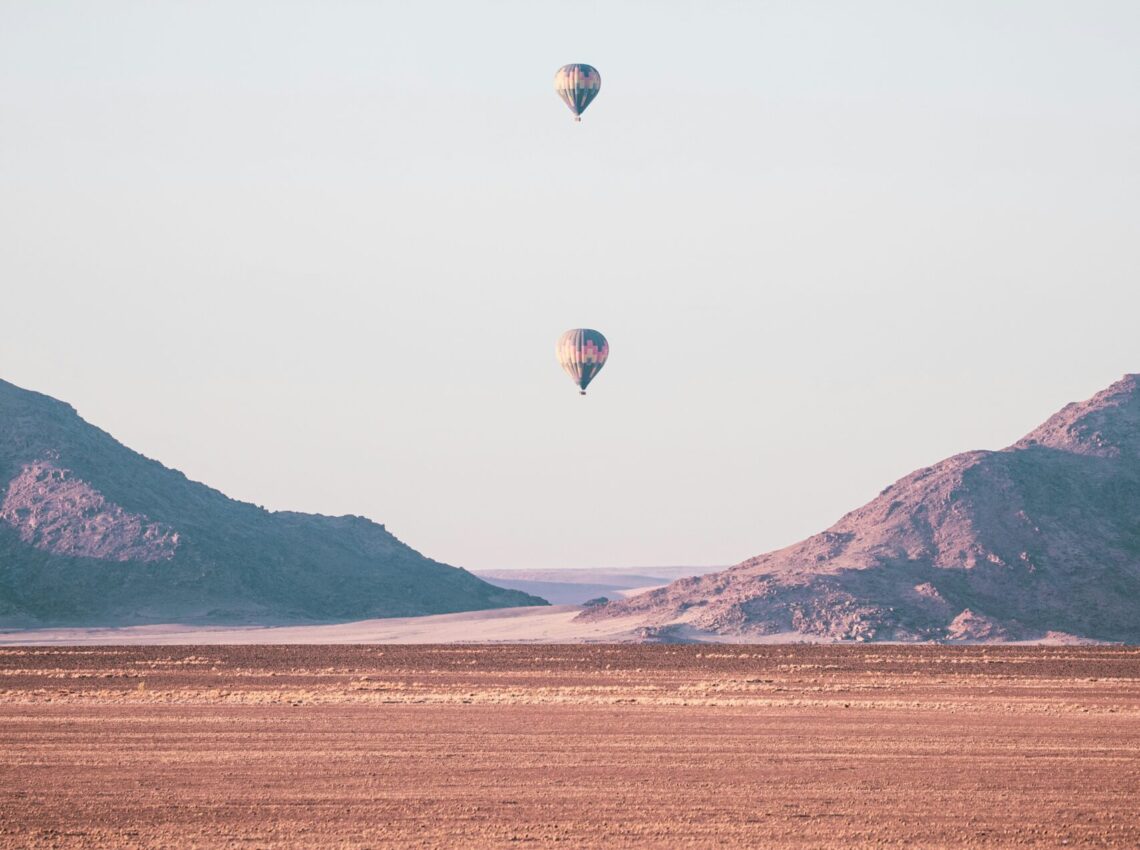
When the first light spills across the dunes of Sossusvlei, the desert turns every shade of gold and apricot. It is at this hour that the air stills, the horizon glows, and the balloons begin to rise. Hot air ballooning in Namibia is more than an adventure. It is an encounter with space, silence, and scale—a moment when the landscape opens beneath you and the morning feels infinite.
Each flight lasts around an hour and begins before sunrise when the winds are calm and temperatures are cool. As you drift above the Namib Desert, the balloon’s shadow stretches across the sand, tracing ridges, plains, and salt pans that have existed for millions of years. The experience ends with a champagne breakfast in the dunes and a gentle nature drive back to your lodge.
Where You Fly
Balloon safaris operate mainly around Sossusvlei and the NamibRand Nature Reserve, two of the most dramatic desert regions in Africa. The terrain combines open dune seas, gravel plains, and sculpted mountains that catch the first light perfectly. Flights depend on weather and always launch at dawn for maximum calm.
Launch sites change with wind direction, which adds to the sense of adventure. Most operators serve lodges near Sesriem and across NamibRand, including Sossusvlei Lodge, Kulala Desert Lodge, and Sossusvlei Desert Lodge. Guests are collected thirty to forty five minutes before sunrise and driven to the chosen launch site. The exact spot is decided that morning after the pilot assesses wind conditions, ensuring both safety and the best possible route over the dunes.
The Flight Experience
The full experience takes around three and a half hours from pickup to return. It begins with a short briefing while the crew inflates the balloon at first light. Takeoff happens as the sun breaks the horizon, the basket lifting gently off the sand as the burner roars to life.
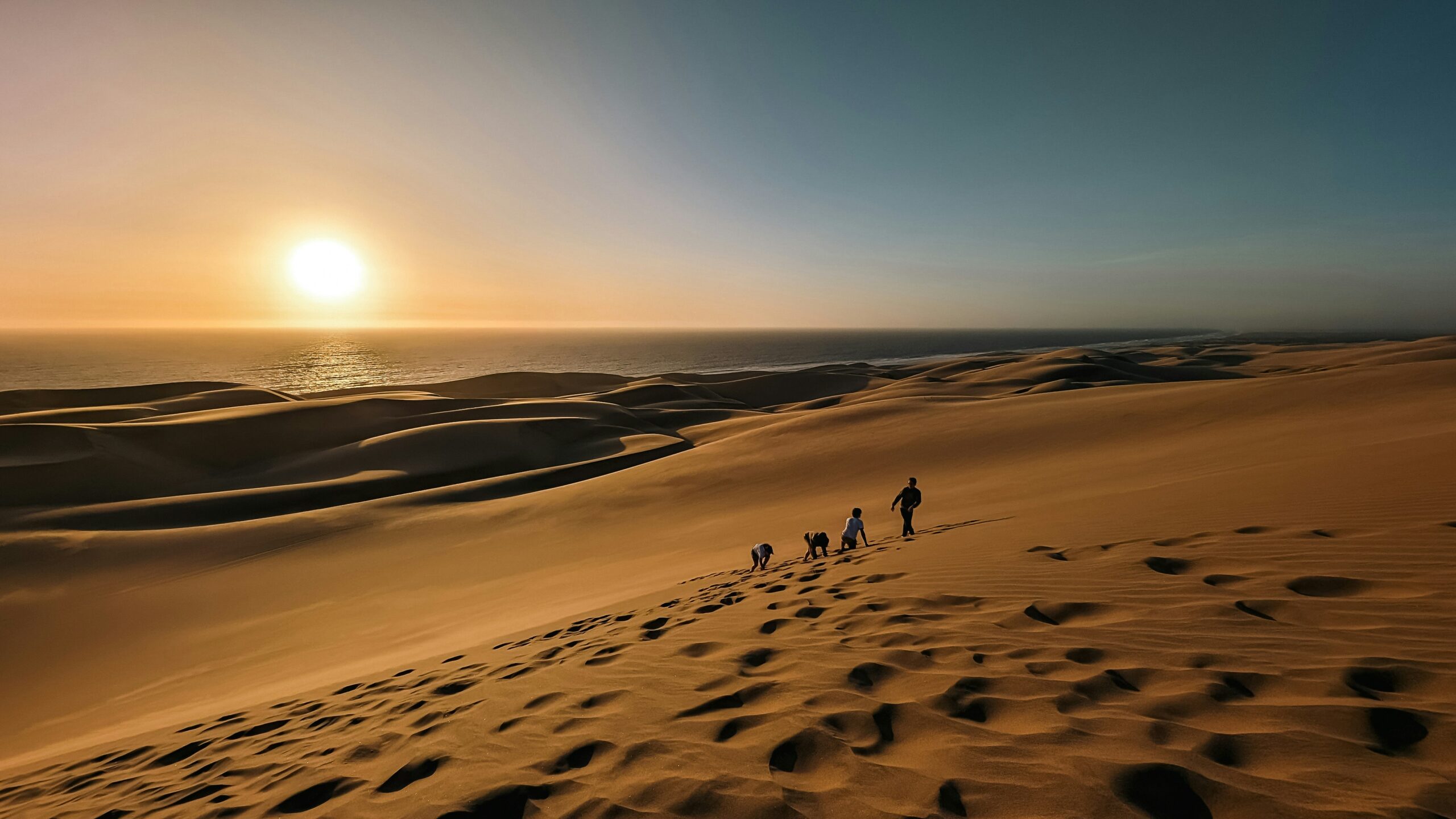
Once airborne, the pilot adjusts altitude to show different perspectives. You sweep over dune ridges, their crests sharp against the sky. Then drop lower, gliding close enough to spot oryx or springbok moving below. The stillness is striking. No engine noise, no vibration, just the occasional burst of the burner breaking the silence. The desert unfolds in layers: rust colored sand, white salt pans, dark gravel plains, distant mountains catching the first rays.
After landing, a table awaits in the sand with linen, fresh fruit, pastries, and chilled champagne. The breakfast feels celebratory but unhurried, a chance to absorb what you’ve just seen while the morning light continues to change. The slow drive back to camp through the desert plains offers another perspective, with opportunities to spot wildlife and appreciate the vastness of the Namib from ground level.
When to Go
Ballooning is possible most of the year, but the most comfortable seasons are March to May and August to October. These months bring mild temperatures, clear skies, and soft light that suits photography. Many travelers plan for the broader dry season between May and September, when mornings are cool and conditions are stable.
Some operators pause departures in peak summer, usually from mid January to mid February, when heat and wind can make flying unsafe. Always confirm availability and schedules in advance through your lodge or operator. Weather remains the ultimate deciding factor. Pilots will delay or cancel flights if conditions are unsuitable, prioritizing safety over schedules.
Practical Details
Flights happen only in the morning when winds are gentlest. Pickup times are confirmed the evening before, with guests collected about half an hour before sunrise. Every passenger receives a full briefing before takeoff covering safety procedures and what to expect during the flight.
The experience includes the flight itself, the champagne breakfast, and the return nature drive, all arranged seamlessly through your lodge or activity desk. Dress in layers for cool early morning temperatures, wear closed shoes for the sand, and bring a camera with a strap to keep your hands free during takeoff and landing.
Beyond the Balloon
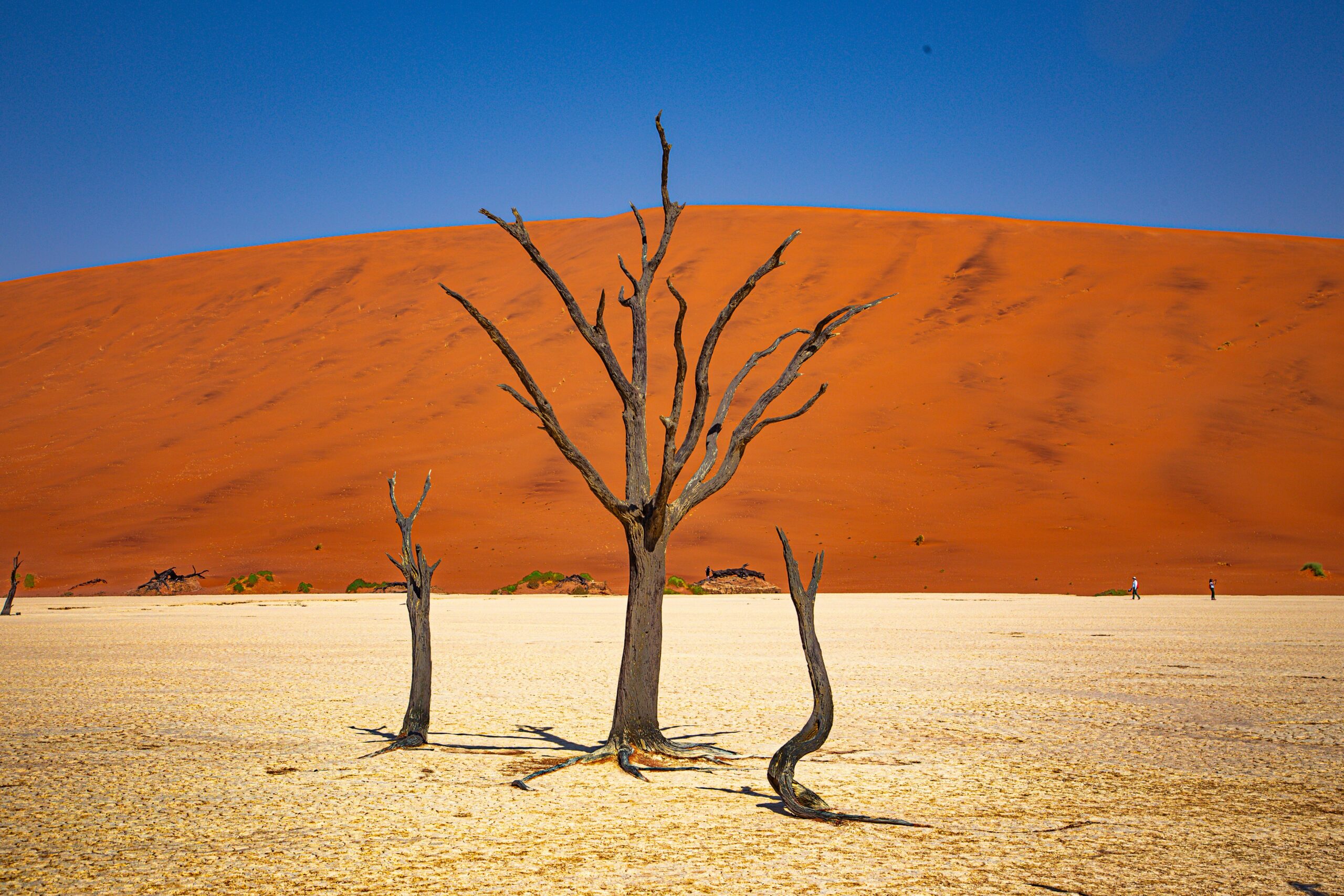
Combine a balloon safari with early morning or late afternoon visits to Sossusvlei and Deadvlei for contrasting perspectives of the dunes. These hours offer the most flattering light and the coolest ground temperatures. The aerial view gives context to what you see on foot: the scale of the dune fields, the pattern of dry riverbeds, the isolation of dead trees standing in white clay pans.
Travelers who visit in spring or autumn can easily pair this experience with wildlife viewing in Etosha, where dry season conditions concentrate animals around waterholes. The balloon safari works well at either the beginning or end of a Namibia itinerary, offering a dramatic aerial introduction or a reflective farewell to the desert.
The Operators
Namib Sky Balloon Safaris, founded in 1991 and still family run, pioneered ballooning in this region and remains the leading operator. Their pilots know the desert intimately, understanding wind patterns, seasonal variations, and the safest routes over changing terrain. The company follows strict safety and conservation standards, operating with minimal environmental impact and supporting local communities.
Most lodges partner directly with Namib Sky or similar specialists to coordinate logistics. This ensures smooth pickups, reliable communication about weather delays, and integration with your broader safari schedule.
Why This Matters
Seeing Namibia from above reveals what makes this landscape so extraordinary. The perspective shows the ancient rhythm of wind and sand, the patterns carved by time, and the subtle life that survives in this arid world. From ground level, the dunes feel massive and immediate. From the air, they become part of a larger system: waves of sand stretching to every horizon, shaped by winds that have blown the same direction for millennia.
Floating in silence at sunrise, you realize how small and how fortunate you are to witness it. The light changes minute by minute. The shadow of your balloon glides across ridges and valleys. The desert breathes with you, patient and timeless.
Hot air ballooning here is not about adrenaline or speed. It’s about stillness, perspective, and gratitude. It’s about seeing a place so vast and ancient that your presence barely registers, yet feeling profoundly connected to it. The quiet becomes meditative. The view becomes memory. And when you land, feet back on sand, the desert has changed you in small ways you’ll spend the rest of the day understanding.
This is the essence of travel that stays with you long after you’ve returned home. Not just what you saw, but how you saw it. Not just where you went, but how you felt being there.