
Caprese: The Salad That Tastes Like Summer on Capri
On Capri, they don’t overthink food. The island’s restaurants serve what grows nearby: tomatoes from Campanian hillsides, buffalo mozzarella from dairies around Salerno, basil from kitchen gardens. The salad named after this island, insalata Caprese, reflects that simplicity. Three ingredients, barely touched, arranged on a plate. No fuss, no cleverness, just quality meeting restraint.
The best version I ever tasted was at a trattoria in Anacapri, the quieter half of the island, away from the yachts and boutiques. The tomatoes were still warm from the sun. The mozzarella had been made that morning. The basil leaves were so fresh they bruised if you handled them roughly. The waiter drizzled olive oil from an unlabeled bottle and walked away. Nothing else was needed.
This isn’t a salad you make in January with supermarket tomatoes and mass-produced cheese. It’s a summer dish, dependent entirely on what you start with. Great ingredients, minimal intervention, maximum flavor. That’s the Southern Italian philosophy in three components.
Why This Works
The magic is in the contrast. Tomatoes bring acidity and sweetness. Mozzarella offers cool creaminess and a subtle tang. Basil adds peppery aromatics. Olive oil ties everything together and amplifies the flavors without masking them. Salt and pepper provide punctuation.
When the ingredients are perfect, this salad transcends simplicity and becomes something you remember. When they’re mediocre, no amount of technique can save it. That’s why timing and sourcing matter more here than in almost any other dish.
Ingredients
Serves 2 to 3
The Essentials
3 to 4 ripe tomatoes (heirloom, mixed colors, whatever looks best)
200 g fresh mozzarella (buffalo mozzarella or burrata)
Handful of fresh basil leaves (small, tender ones)
Extra virgin olive oil (your best bottle)
Sea salt flakes
Freshly cracked black pepper
Optional Refinements
Aged balsamic vinegar or balsamic glaze
Dried oregano or lemon zest
Toasted pine nuts or crushed pistachios
The Method
Prepare the tomatoes: Slice large tomatoes into thick rounds or wedges. Halve cherry tomatoes if using. Sprinkle lightly with salt and let them sit for 5 to 10 minutes. This draws out their juices and concentrates their flavor.
Handle the mozzarella: Drain and pat the cheese dry with a towel. For a classic presentation, slice it into even rounds. For something more rustic, tear it into irregular pieces. Torn edges catch more olive oil and tomato juice, which improves both texture and flavor.
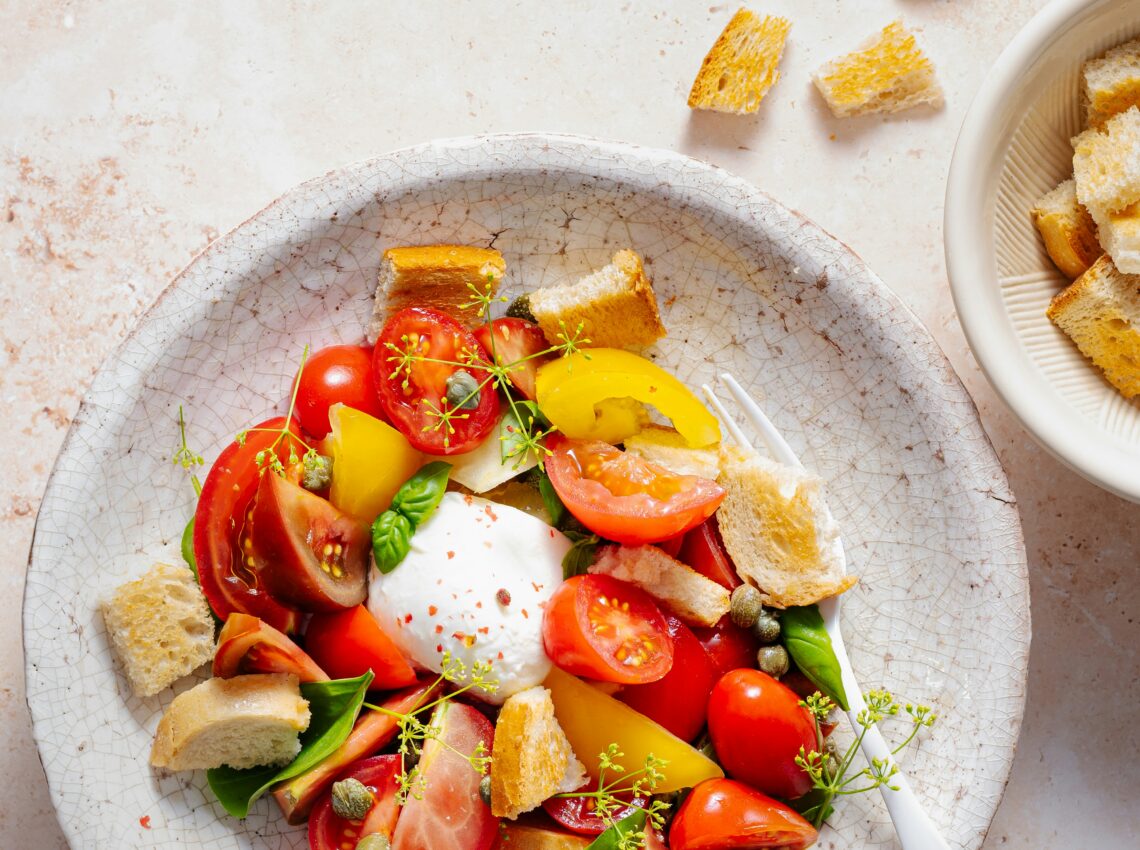
Assemble simply: Layer the tomatoes and mozzarella on a wide, shallow plate or platter. Tuck basil leaves between the slices as you go. Don’t arrange it too precisely. This should feel abundant and natural, not fussy.
Dress generously: Drizzle olive oil over everything. Be bold here. The oil is essential, not optional. If you’re using balsamic, add just a small splash for sweetness. Finish with sea salt flakes and a few cracks of black pepper.
Serve at room temperature: Cold tomatoes lose their sweetness and their texture becomes mealy. Let everything sit at room temperature for at least 20 minutes before serving. This is crucial.
Notes on Ingredients
Tomatoes are everything. Use the ripest, most flavorful ones you can find. Heirloom varieties in mixed colors look beautiful and taste complex. If you’re making this outside of peak summer, don’t bother. Mediocre tomatoes make a mediocre salad, and there’s no way around it.
Mozzarella quality varies wildly. Buffalo mozzarella (mozzarella di bufala) from Campania is the gold standard—creamy, tangy, with a slight pull when you bite into it. If you can find burrata, use it. Serve it whole in the center of the plate and let guests break it open. The creamy interior spilling out is dramatic and delicious.
Basil should be fresh and handled gently. Bruised basil turns black and tastes bitter. Add it at the last moment and don’t chop it unless necessary. Whole leaves or gentle tears are better.
Olive oil is not neutral here. Use your best bottle. This dish showcases it. Peppery, grassy Tuscan oil or fruity Sicilian oil both work beautifully. Avoid anything bland or rancid.
Salt matters. Flaky sea salt or Maldon salt provides texture and clean flavor. Table salt dissolves too quickly and tastes harsh.
Variations
Add stone fruit: Sliced peaches or nectarines alongside the tomatoes bring sweetness and work surprisingly well with mozzarella and basil.
Grill vegetables: Charred zucchini ribbons or grilled peppers add smoky depth while keeping the dish seasonal.
Go full burrata: Instead of sliced mozzarella, place a whole ball of burrata in the center. Guests tear into it, and the creamy interior becomes a sauce for the tomatoes.
Finish with herbs: Microgreens, torn mint, or a drizzle of basil oil add refinement if you’re plating for guests.
Balsamic reduction: Reduce balsamic vinegar with a touch of honey until syrupy. Drizzle sparingly for sweetness and acidity.
The Philosophy
Great Italian cooking isn’t about technique or complexity. It’s about knowing when to stop. A Caprese salad made well demonstrates restraint, seasonality, and respect for ingredients. You don’t improve it by adding more. You improve it by starting with better tomatoes, fresher cheese, and understanding that sometimes three perfect things need nothing else.
On Capri, this philosophy extends beyond food. The island’s beauty comes from its cliffs, its light, its simplicity. The best meals happen on terraces overlooking the sea, where the view and the food share the same principle: less is more, and timing is everything.
This salad works because it doesn’t try too hard. It asks you to find ripe tomatoes, good mozzarella, and fresh basil. Then it asks you to get out of the way. The ingredients do the rest. When they’re right, the result tastes like summer on an Italian island. When they’re not, no amount of dressing or garnish can fake it.
That honesty is what makes it worth making—and worth waiting for tomato season to make it properly.
A taste of Capri. No ferry required.
Discover more Southern Italian recipes in our Food & Drink collection.