
Bún Bò Huế: The Soup That Ruled an Empire
Born in the kitchens of Vietnam’s imperial court, this scarlet noodle soup carries centuries of refinement in every bowl.
In the shade of Huế’s Citadel, where Vietnam’s last emperors once held court, street vendors still tend bubbling cauldrons of bún bò Huế. This lemongrass laced broth is bolder and more complex than its northern cousin, pho. It’s central Vietnam on a spoon: aromatic, layered, unapologetically spicy. The depth comes from hours of patient simmering and the kind of chili oil that stains your lips and lingers in your memory.
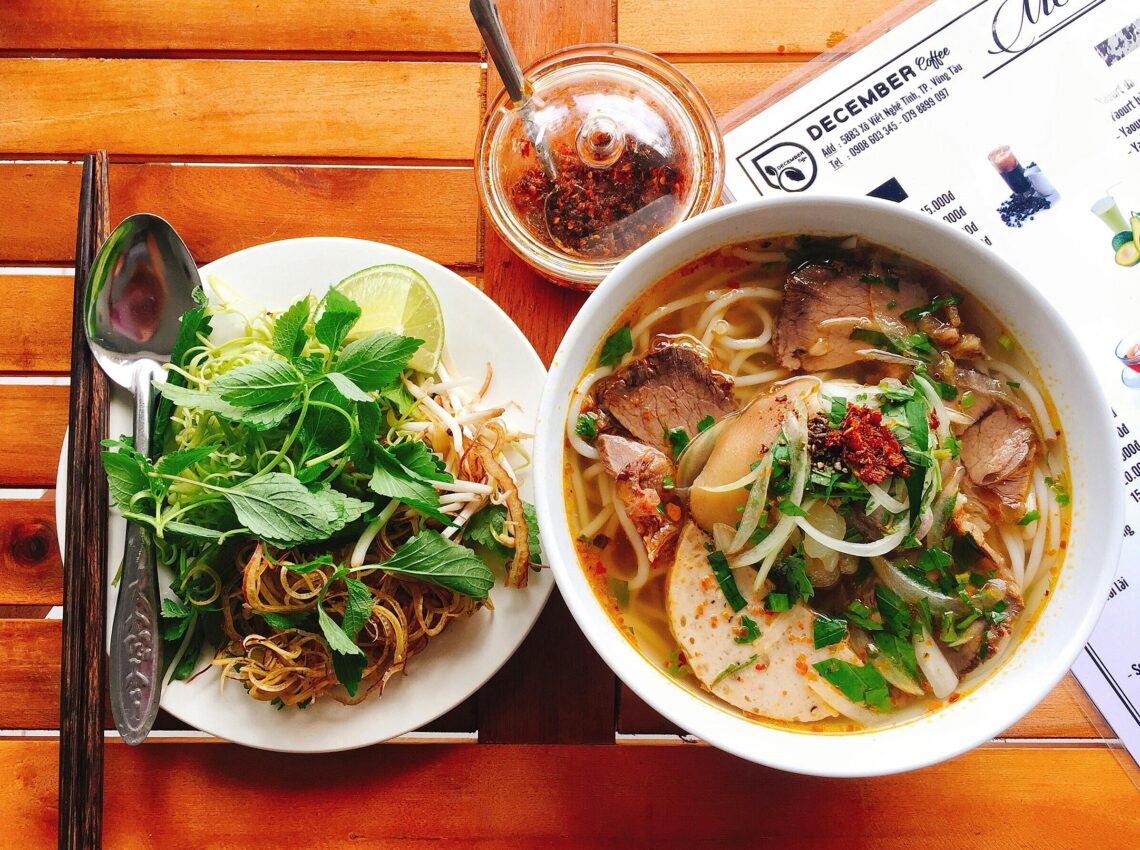
Making it at home is an act of devotion. However, the reward is a bowl that transports you: to Huế’s morning markets, to riverside tables where locals slurp noodles with abandon, to a culinary tradition that treats soup not as sustenance but as ceremony. The round rice noodles are thicker than pho’s delicate ribbons, built to hold their own against the robust broth. Meanwhile, tender beef and pork mingle with a signature saté chili oil, while a platter of fresh herbs and lime wedges arrives on the side, inviting you to compose your own balance of heat, crunch, and brightness.
The Flavor Profile
Lemongrass builds the citrusy backbone, its perfume woven through every spoonful. Next, annatto seeds bloom into a brick red oil that gives the broth its imperial glow and gentle warmth. Meanwhile, fish sauce and shrimp paste anchor the savory depths, creating a complexity that keeps you reaching for more. Ultimately, it’s richer and spicier than pho, with a character all its own: the kind of soup that demands your full attention and rewards it generously.
What You’ll Need
Serves 6 to 8; allow 30 minutes prep and 2.5 to 3 hours for the broth to work its magic.
For the Broth: Start with 1.5 kg beef shank or brisket, kept whole for now. You’ll also need 1 kg beef marrow or knuckle bones (oxtail adds luxurious richness if you can find it), plus 600 g pork hocks or trotters, rinsed clean. Additionally, gather 2 large yellow onions (halved), 8 to 10 lemongrass stalks (bruised and tied into bundles), and a 5 cm knob of ginger, halved. For sweetness and depth, include 1 small pineapple (chunked) or 2 tbsp rock sugar, 2 to 3 tbsp fish sauce (plus more for adjusting), 1 to 2 tsp fine shrimp paste (optional but deeply traditional), and 3 tsp salt.
For the Chili Annatto Oil: You’ll need 3 tbsp neutral oil, 2 tbsp annatto seeds (or 2 tsp paprika for color), 4 cloves minced garlic, 3 tbsp minced lemongrass (tender white parts only), 2 minced shallots, and 1 to 2 tbsp chili flakes or Vietnamese saté chili paste.
For Assembly: Gather 500 to 600 g round rice noodles (look for bún bò Huế size at Asian grocers), 300 g Vietnamese pork ham or cha lua (sliced), your cooked beef shank from the pot (thinly sliced), plus fresh mint, Thai basil, and coriander. Finally, prepare bean sprouts, sliced banana blossom or cabbage, lime wedges, sliced chilies, and thinly sliced onion and spring onion.
Building the Broth
Parboil: Begin by covering the bones and meats with cold water. Bring to a hard boil for five minutes. Afterward, drain everything and rinse the pot thoroughly. This purges impurities and sets the stage for a crystal clear broth.
Refill: Add 4.5 to 5 litres of fresh water to the cleaned pot, along with the meats and bones. Next, nestle in the onions, bundled lemongrass, ginger, pineapple or rock sugar, salt, and fish sauce.
Simmer: Bring to a gentle simmer and let it bubble quietly for 2 to 3 hours, skimming any foam that rises. Your kitchen will fill with the perfume of bruised lemongrass and slowly sweetening aromatics.
Around the 1 to 1.5 hour mark, the pork hocks will be tender enough to pull from the pot. Set them aside. Continue simmering until the beef is sliceable and yielding. Once ready, remove the beef and let it cool briefly. Then slice it thinly across the grain for pieces that drape elegantly over the noodles.
The Chili Annatto Oil
This is where the soup gets its imperial scarlet and its heat. Start by warming the neutral oil over medium heat. Add the annatto seeds, swirling until the oil turns a deep, sunset red. Strain out the seeds and return the oil to the pan.
Next, add the shallot, minced lemongrass, and garlic. Sauté until fragrant and golden at the edges. Then stir in the chili flakes or saté paste to form a brick red, aromatic paste. Scrape this into the simmering broth, then add the shrimp paste if you’re using it.
Finally, taste and adjust: the broth should be savory first, with a citrusy lemongrass hum and a gentle sweetness on the finish. Add more fish sauce or salt until it sings.
Preparing the Noodles
Boil the round rice noodles according to the packet directions. Cook until they’re just tender with a slight chew. Afterward, rinse them briefly under warm water to remove excess starch. This keeps the strands bouncy and separate. These noodles are heartier than pho’s, built to stand up to the robust broth.
Composing the Bowl
To each bowl, add a generous handful of noodles and a few slices of beef shank and cha lua. Then ladle in the steaming, scarlet broth. Make sure to include some of the tender hock meat or a piece of marrow if you’re feeling indulgent. Top with sliced onion and spring onion.
Next, present the herbs and sprouts on a side plate: mint, Thai basil, coriander, bean sprouts, lime wedges, and sliced chilies. Let each person build their own balance of crunch and brightness. They can adjust the heat with extra saté at the table, just as they would at a bún bò stall along the Perfume River.
Notes on Technique
Keep the broth at a gentle simmer, never a rolling boil. I learned this the hard way: a rolling boil clouds the broth and dulls the aromatics. It turns something refined into something muddy. Therefore, low and slow preserves clarity and lets the flavors meld beautifully.
The pineapple or rock sugar isn’t there to make the soup sweet. Instead, it rounds the saltiness and amplifies the aromatics. This creates a more complex, layered finish.
Additionally, slice your meats thinly after chilling them briefly. This gives you neat, tender pieces that look as elegant as they taste.
If you’re short on time or ingredients, beef stock can supplement the bones. Moreover, paprika with a touch of turmeric can stand in for annatto seeds. Ready made saté chili paste saves half an hour without sacrificing much flavor.
Make Ahead and Storage
Like most great broths, this one develops even more character overnight. Chill it and remove the solid fat for a lighter, cleaner bowl.
The broth and meats will keep in the fridge for up to three days. Alternatively, freeze them for up to two months. However, cook the noodles fresh on serving day for the best texture.
When reheating, warm the broth gently. Add a splash of fish sauce and a squeeze of lime to wake it up.
Adaptations
If lemongrass stalks are hard to find, use 2 to 3 tsp of lemongrass paste added early in the simmer. Cha lua is available at most Asian grocers. However, firm pork meatballs work in a pinch. If shrimp paste feels too pungent, skip it. Instead, finish with extra fish sauce and a more generous hand with the saté.
For a lighter version, simmer chicken legs with lemongrass and onion for 60 to 70 minutes. Then finish with the same chili oil and round noodles.
Alternatively, try a tofu version: press extra firm tofu and marinate slices in soy, lemongrass, and a little chili oil. Pan sear until golden, and ladle the spicy broth over the top.
The Ritual of the Bowl
Great bún bò Huế is about balance: savory broth, citrusy lemongrass, a gentle sweetness, and heat that builds slowly without overwhelming. It’s the kind of dish that asks you to slow down. Notice the way the herbs release their perfume as they hit the hot broth. Adjust and taste. Compose each spoonful to your liking.
Whether you’ve wandered Huế’s markets or you’re simply chasing that memory from across the kitchen table, this is a bowl that rewards the effort. It’s complex without being fussy. Bold without losing elegance.
Ultimately, this isn’t just a recipe: it’s a way to travel through memory and flavor. A dish to share, savor, and revisit each time you crave a reminder of Huế’s timeless charm.
Explore more destination inspired recipes and culinary journeys in our Food & Drink collection.